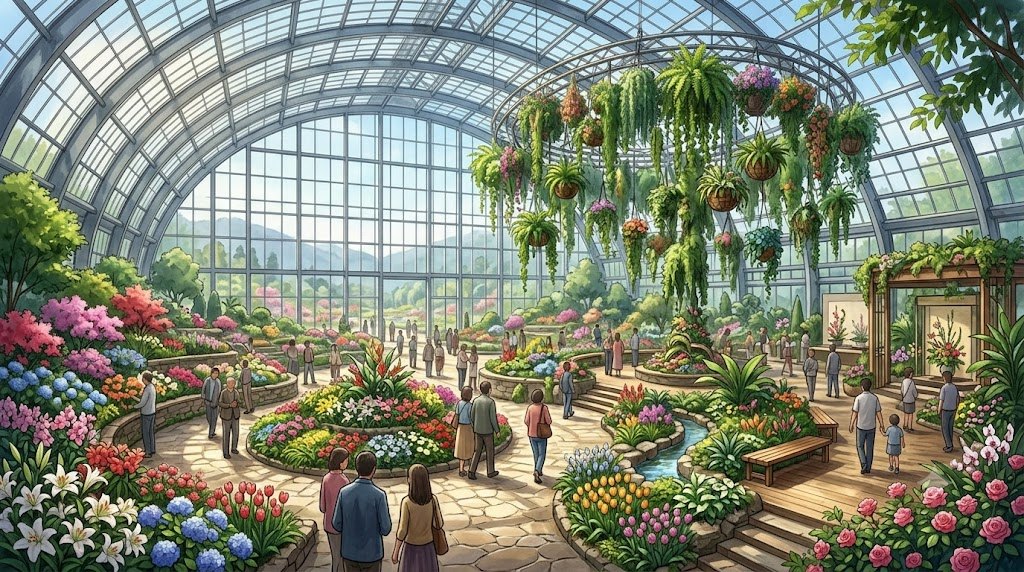
 Theme facilities
Photo: Horticultural Pavilion "IROHA-GARDEN" / 2027年国際園芸博覧会協会 (公式サイトからの引用) via 出展者公式サイト
Horticultural Pavilion "IROHA-GARDEN"
Japan Association for the International Horticultural Expo 2027, Yokohama
- Theme
- Discover, Experience, and Carry Forward Japan's Horticultural Culture
- Highlights
- Three themes, Learn, Experience and Passing It to the Future, explored across indoor and outdoor areas
- A recreated Edo-period plant nursery and Hanayashiki flower garden, with seasonal displays of 37 varieties of traditional plants (planned)
- 31 plants and their display months already listed on the official site, from camellias and peonies to morning glories and chrysanthemum figures
- Large Noto Kirishima azaleas and potted wisteria from Ashikaga Flower Park are planned to be on loan
- A green-roofed building using the traditional hanegi technique in a staggered layout, with design supervised by architect Kengo Kuma
Official site & social media
- Page on the GREEN×EXPO 2027 official site
- expo2027yokohama.or.jp/en/learn-enjoy/horticulturalpavilion
- Exhibitor's official page
- horticulturalpavilion.expo2027yokohama.or.jp/en
User-submitted estimate (unofficial). Today's crowd guide
The Horticultural Pavilion “IROHA-GARDEN” (Engei Bunka-kan “Irohaniwa”) is one of the exhibits run directly by the Expo organizer. Its concept is “Discover, Experience, and Carry Forward Japan’s Horticultural Culture,” presenting the aesthetics and techniques of Japanese horticulture handed down since the Edo period through real plants, recreated spaces, film and hands-on experiences. The nickname, chosen by public vote, combines the traditional “iroha” (the ABCs, or the basics and depth of something) with “niwa” (garden).
Exhibits
The pavilion is organized around three themes that visitors explore indoors and outdoors:
- Learn (Main Pavilion): the horticultural booms that captivated samurai and commoners, rare mutant morning glories, techniques such as grafting, and the beauty of traditional horticultural plants.
- Experience (Edo-Period Plant Nursery & Hanayashiki Flower Garden): a recreation of the Edo-period nurseries and flower gardens where people of all classes enjoyed seasonal plants. Displays will rotate through 37 varieties of traditional plants by season; featured examples include rabbit-ear iris, peony, lotus and azalea.
- Passing It to the Future (Theater and exhibits): how Japanese horticulture spread worldwide after the country opened, and the people who conserve, cultivate and pass on traditional plants today.
- Side Story, “Gardens Through Time”: seven gardens tracing flowers, varieties, flower beds and garden styles from the 1970s to the present and into the future.
The official “Plant Profiles” page lists 31 plants with their display months and whether they are shown indoors or outdoors (checked October 4, 2026): camellias, cherry blossoms and bonsai in March; peonies, azaleas and wisteria in April–May; Japanese irises in June; morning glories, mutant morning glories and lotus in July–August; and chrysanthemum figures in September, among others.
In an interview on the official site, Botanical Director KURASHIGE Yuji highlights large Kirishima azaleas from Noto (borrowed from plants carefully kept in the disaster-hit area) and many large potted wisteria on loan from Ashikaga Flower Park. Most traditional horticultural plants are rarely sold on the open market, and the displays rely on the cooperation of enthusiasts and hobby groups.
Architecture
The building uses the traditional Japanese hanegi structural technique, follows the existing terrain in a staggered “flying geese” layout, and has a planted green roof that connects it to the land. The official site notes that its design was supervised by architect Kengo Kuma.
Timeline
- April 30, 2026: Official teaser website launched
- June 5–26, 2026: Public call for nicknames
- September 15, 2026: Nickname “IROHA-GARDEN” announced (3,611 entries for three facilities); new image of the Edo nursery and flower garden released; official site relaunched with exhibit guide, plant profiles and a monthly “Behind the Scenes” series (8 parts planned)
- September 30, 2026: Nickname results and facility overview published
Before you go
On the venue map, the pavilion sits south of the Indoor Exhibition Facility “HANAMEGURI,” toward the southern area that includes the Japan Pavilion and Garden. Plants rotate through the season, so check the Plant Profiles page for display months. Same-day viewing reservations will be introduced for some exhibits, but which facilities are covered had not been announced as of October 2026.
Sources: Horticultural Pavilion official site (checked 2026-10-04) / Exhibits Guide (checked 2026-10-04) / Plant Profiles (Japanese) (checked 2026-10-04) / Interview with KURASHIGE Yuji (Japanese) (checked 2026-10-04) / GREEN×EXPO 2027: Horticultural Pavilion (checked 2026-10-04) / Press release, Sep 15, 2026 (PDF, Japanese) (checked 2026-10-04) / Nickname results and facility overview, Sep 30, 2026 (Japanese) (checked 2026-10-04) / Viewing reservations, Aug 27, 2026 (PDF, Japanese) (checked 2026-10-04)
*Exhibit details and highlights will be updated as official announcements are released.
Comments on this pavilion
- Loading…
- Always verify on the official site — this is an unofficial, user-generated board.
- Not allowed: misinformation / harassment / discrimination / personal data / ads / links / anything unlawful or offensive.
- Opinions and questions appear instantly. Posts with factual claims (prices, dates, cancellations) are held until checked, then published if fine.
- Please “Report” inappropriate posts. Enough reports auto-hide a post.
- Posts are user-generated and not verified by this site. Check prices and dates on the official site before you act.