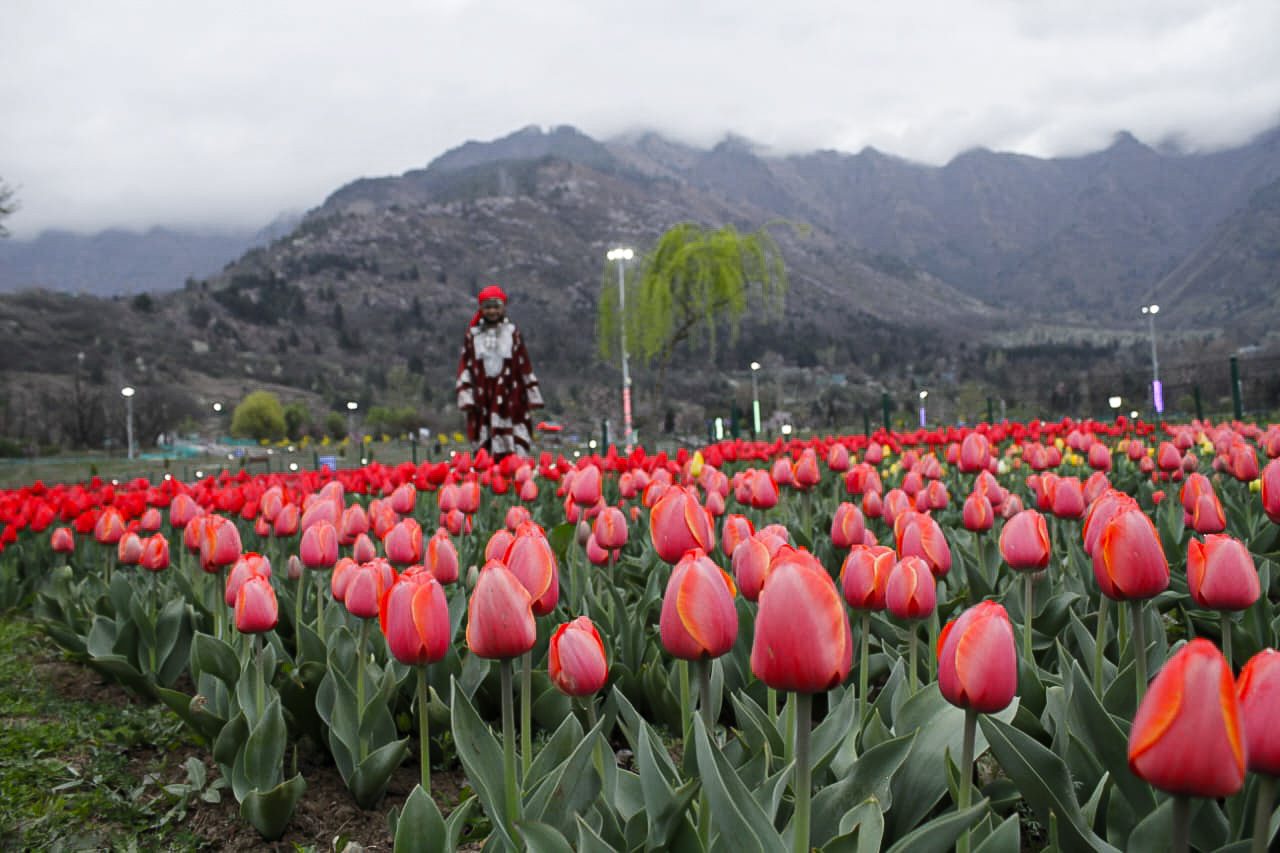
Photo: Tulip field / Journo Mohsin (CC BY-SA 4.0) via Wikimedia Commons
GREEN×EXPO 2027 Flower Bloom Calendar: What Blooms When in Yokohama
GREEN×EXPO 2027 (the 2027 International Horticultural Exposition) is, at its heart, a celebration of flowers and greenery — so the flowers you’ll meet change completely depending on when you go. The expo runs for 192 days, from March 19 to September 26, 2027. It opens with spring tulips, moves through early-summer roses and rainy-season hydrangeas, and finishes with sunflowers, dahlias and cosmos from high summer into early autumn — a half-year relay of seasonal blooms. This guide lays out what’s likely to be in season month by month, based on the usual bloom windows for Yokohama and the wider Kanto region. If you’d rather pick your visit around a specific flower, this is your calendar.
A quick note: this is an unofficial guide. The bloom windows here are general seasonal estimates for Yokohama and Kanto. The specific planting plan — which flowers will be grown where on the grounds — is still to be announced officially. Please confirm with the official site before finalizing your plans.
The big picture: the star flower changes across the run (March–September)
Start with the overview. The half-year run breaks down neatly into three peaks: spring, early summer, and late summer into early autumn. Here are the usual bloom windows for Yokohama and Kanto at a glance.
| Flower | Bloom window | Season |
|---|---|---|
| Tulips | Late March – April | Spring |
| Nemophila | April | Spring |
| Wisteria | Late April – early May | Spring |
| Roses | Mid-May – June | Early summer |
| Hydrangeas | June | Rainy season |
| Sunflowers | Late July – August | Summer |
| Dahlias | Late August – September | Early autumn |
| Cosmos | September | Early autumn |
What this table shows is that whenever you visit during the run, something headline-worthy will be in bloom. Tulips are already up by late March at the opening, and cosmos and dahlias see you off in September near the close. The flip side: if you have your heart set on a particular flower, miss its window and you could be waiting half a year. So choose your flower first, then build your dates around it.
A horticultural expo isn’t a ride-and-attraction event — it’s a place to wander spacious grounds at an unhurried pace and take in the flowers and gardens themselves. That’s exactly why the month you choose shapes the whole experience. Let’s walk through the star flowers, season by season.
Spring: tulips (late March–April), nemophila (April), wisteria (late April–May)
The gates open on March 19, and spring’s headline act is the tulip. In Yokohama and Kanto, tulips are at their best from late March into April — one of the first flowers you can enjoy right from the opening. With their range of reds, yellows, whites and purples, massed tulip beds are the very picture of a spring garden. Since late March falls early in the run, when crowds tend to be calmer, going right after the opening is a smart move if tulips are your goal.
Come April, nemophila comes into season. A carpet of these pale blue blooms spreading across the ground has become hugely popular in recent years. The way the blue blends into the sky makes it a standout for photos, too. Colorful tulip beds and a blue nemophila carpet — even within the same April, you get two very different faces.
Late in spring, from late April into early May, wisteria comes into bloom. Cascading clusters of purple flowers draped from a trellis are a picture from any angle. This window overlaps with Golden Week, so factor the crowds into your plan: many Golden Week days fall into the official peak category (105,000 visitors/day), when attendance jumps sharply. To enjoy the wisteria in peace, shift to a weekday just before Golden Week or right after the holidays. For more on reading the busy and quiet periods, see our crowd forecast.
Early summer: roses (mid-May–June), hydrangeas (June)
As early summer arrives, the spotlight shifts to roses, at their best in Yokohama and Kanto from mid-May through June. Yokohama has long had deep ties to roses, with several famous rose gardens around town. Rich in both color and scent, they’re one of the flowers people most look forward to at the expo. Late May into early June, when the blooms come together, is one of the most flower-dense stretches of the year.
Then June brings hydrangea season, alongside the rainy weather. There’s a beauty unique to this time of year, when blue and purple blooms glisten in the rain. It’s a period people tend to avoid — “it’s raining, let’s stay in” — but for hydrangeas, rain is exactly what suits them. If you’re after that fresh, dewy look, a light-rain day or the hours just after a shower are the windows to aim for.
The rainy June stretch is also, in crowd terms, an easy time to find space. Rain tends to thin out attendance, so aiming for a clear spell or the time after rain lets you hit the sweet spot of “hydrangeas in season plus an uncrowded venue.” That said, this is grounds you tour on foot, so wet-weather gear is essential — see our what to bring guide for what to pack in the rainy season.
High summer to early autumn: sunflowers (late July–August), dahlias (late August–September), cosmos (September)
The peak of summer, late July into August, is sunflower season. Tall yellow blooms standing together toward the sky are a symbol of a summer day out, and a field you have to look up at makes an appealing destination for a family outing over the break. But this is the hottest stretch of the year, and at a largely outdoor venue, heat precautions move from “nice to have” to genuinely necessary. Plan around hydration, salt and rest breaks, and tour the sunflower fields in the cooler windows — right at opening or in the late afternoon.
From late summer into early autumn, late August through September, dahlias come into their own. Large-headed and available in a wide range of colors, with blooming styles that vary by cultivar, dahlias are a rewarding autumn flower. Their full, voluminous form suits this in-between time where summer meets autumn.
And the finale of the run belongs to cosmos in September. Delicate flowers swaying in the autumn breeze are a fitting send-off for a half-year exposition, which closes on September 26. One caveat: weekends and holidays in September get busy, with last-minute visits before the close piling on, and the official estimates concentrate peak days (105,000/day) here. To enjoy the cosmos at a relaxed pace, aim for a September weekday — Tuesday through Thursday especially.
How to pick your visit around the flower you want to see
With all of that in mind, here’s how to work backward from the flower you most want to see.
- Spring flowers (tulips, nemophila) → Late March to April. Early in the run and relatively calm, so easy to take in at a relaxed pace.
- Wisteria or roses → Late April to June. Note that wisteria (late April–early May) overlaps Golden Week, and roses (mid-May on) draw weekend crowds, so a weekday is more comfortable.
- Hydrangeas → June. An easy time to find space thanks to the rainy season — just don’t forget your wet-weather gear.
- Sunflowers → Late July to August. It’s brutally hot, so make heat precautions the priority and aim for the cooler hours.
- Dahlias and cosmos for an autumn feel → Late August to September. With the close approaching, September weekends get crowded, so weekdays are the pick.
Two tips. First, line up your flower’s bloom window with a quiet weekday. Even the loveliest flowers lose their impact in a crush, so if you can spare a single weekday — Tuesday to Thursday — that’s the most reliable choice. Second, build your day around the flowers. Touring all of the roughly 100-hectare grounds in a day isn’t realistic, so set your route around the area for the flower you came for. For routing ideas, see our model courses.
One last reminder: this calendar is a guide based on the usual bloom windows for Yokohama and Kanto. The specific planting plan — which flowers will be grown where, and at what scale — is still to be announced officially. Once it’s released, we’ll keep our bloom calendar updated. Pick your flower, plan around that season’s crowds and packing, and you’ll have the most enjoyable day among the blooms.
To build a day around the flowers in season, pair this with our crowd forecast for a quiet day, our model courses for routing, and our what to bring guide for seasonal packing. For the big picture, start with What is GREEN×EXPO 2027?, and for the latest on the flowers at the venue, see the bloom calendar.