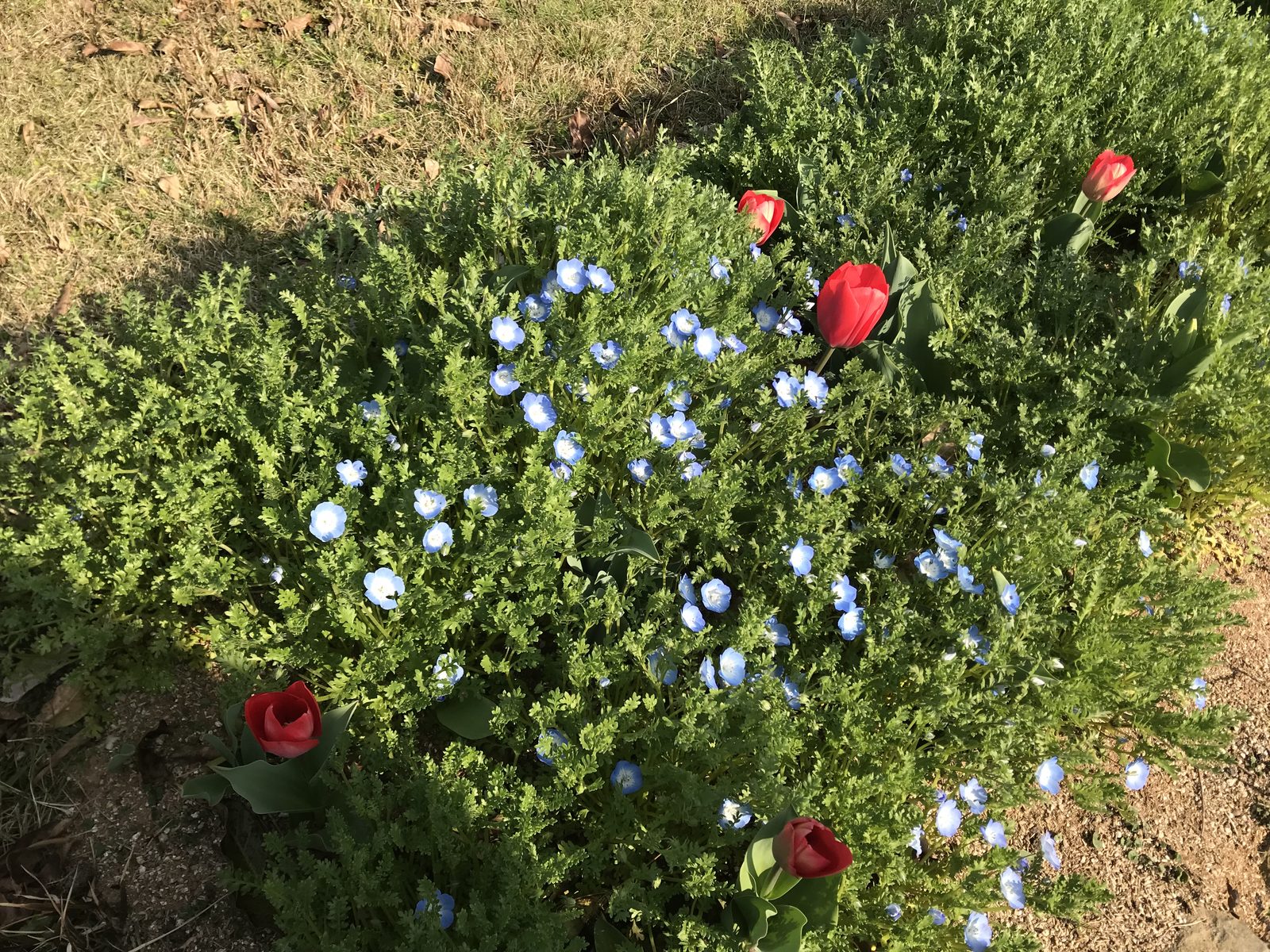
Photo: Nemophila / そらみみ (CC BY-SA 4.0) via Wikimedia Commons
GREEN×EXPO 2027 Model Itineraries: Half-Day, Full-Day & With Kids
The grounds cover about 100 hectares. That is a lot of walking, and trying to see everything in a single day tends to leave you tired rather than inspired.
The trick to enjoying GREEN×EXPO 2027 (the 2027 International Horticultural Exposition) is to decide from the start that you won’t see it all. Below are four model courses, organized by how much time you have and who you’re with.
A quick note: this site is an unofficial guide. Always confirm the latest ticket and operating details on the official website.
Plan around not seeing everything (how to choose your pavilions)
The site is organized into five “villages” — Urban GX, Craft, Farm & Food, Kids and SATOYAMA — plus major facilities such as the Theme Pavilion, the Horticultural Pavilion “IROHA-GARDEN” and the Japan Pavilion and Garden.
The Japan Pavilion and Garden alone has an exhibition area of roughly 2.5 hectares, among the largest on the grounds.
Trying to give every one of these equal attention is the surest way to wear yourself out. A better approach is to pick two or three pavilions you really want to see before you arrive.
- If you lean toward technology — OBAYASHI MORI SORA MIRAI or the Mitsubishi Minnano Miraikan in Urban GX Village.
- If food and wellbeing appeal to you — Meiji Group’s “ORAGA VILLAGE — Hometown of the Future” or Sakata Seed’s “Seed Journey” hall in Farm & Food Village.
Choosing a theme first turns your day into a single connected route and cuts out wasted backtracking.
The day of the week matters too. Official daily attendance estimates put a typical weekday (outside Golden Week and the summer holidays) at about 50,000 people, versus about 105,000 on peak-period weekends and holidays — more than double.
If you can go on a Tuesday, Wednesday or Thursday, the grounds will simply feel easier to walk. For what to pack and wear, see the what to bring guide; for how busy each type of day tends to be, see the crowd forecast.
Half-day course (the essentials, with an evening ticket)
If you’re stopping by in the afternoon, or after work or another plan, a half day is plenty. Often it’s more satisfying than stretching things over a full day.
Ticket basics
GREEN×EXPO 2027 offers ticket types such as a summer pass (¥12,000 for adults) and an evening ticket (¥3,500 for adults, entry from 5 pm), and at present tickets are not tied to a specific date.
One caveat: timed-entry reservations have been open since September 18, 2026; the steps are in the how to make a timed-entry reservation. Entering later in the day can let you avoid the midday peak and move around more comfortably.
The half-day plan
For a half day, resist the urge to overpack your plan. Something like this works well:
- Head to the Theme Pavilion “NEKKO” first. Built around the concept “All life is connected, with plants at the heart,” it conveys the power of plants and Nature-based Solutions (NbS) — the backbone of the whole expo — so it grounds everything else you’ll see.
- Then focus on just one village, the one you chose in advance.
- Spend any remaining time at the Horticultural Pavilion “IROHA-GARDEN” or in the seasonal flower areas.
As a rough seasonal guide for Yokohama and the Kanto region, tulips peak from late March into April, nemophila in April, roses from mid-May into June, hydrangeas in June, and cosmos in September.
The specific plantings on the grounds will be announced officially later, but choosing the season’s flower as one of your goals makes even a short visit memorable.
Full-day course (all five villages, balanced)
For a full day, the key isn’t to spread yourself thin across all five villages — it’s to set a core and let the rest fall into place. The grounds are relatively quiet right after opening, so it pays to tackle the likely-popular pavilions in the morning.
- Morning — Start with the two anchor facilities: the Japan Pavilion and Garden, and the Theme Pavilion. The Japan Pavilion and Garden is among the largest exhibits on the grounds, built around the concept “Reconsidering the Japanese View of Nature, Moving Toward the Future” and featuring an immersive theater. Experiencing it before the crowds build makes the rest of your day easier.
- Lunch — Make lunch part of Farm & Food Village. With food-related exhibits clustered there — the JA Group’s “ITADAKIMASU” outlet, the Yamazaki “A Bright Table for Tomorrow” Pavilion and others — you can rest and eat in one stop.
- Afternoon — Take the remaining villages in your order of interest. For technology, Urban GX Village (Kajima’s KAJIMA TREE, the Daiwa House Group Endless Heart Park, KT GROUP Mobi+ (Mobitas) and more); for crafts and making things, Craft Village; for nature experiences, SATOYAMA Village.
- Evening — To close out the day, return to the flower areas or revisit the Theme Pavilion at a slower pace.
The Craft, Kids and SATOYAMA villages have announced their exhibitors too, and exhibit details keep coming hall by hall, so it’s worth checking the latest information before you go.
There is no station next to the venue; you reach it by reservation-only shuttle bus from four stations — Seya, Mitsukyo, Tokaichiba and Minami-machida Grandberry Park. The return buses get busy, so rather than staying until the very last minute, give yourself a little buffer.
See the access guide for details.
Touring with kids or as a couple
With kids
Keeping walking distances short is the top priority. Crossing the grounds end to end in a day is hard even for adults, so it’s more realistic to base yourself around Kids Village and add just one or two neighboring areas.
- Take lunch early at Farm & Food Village to dodge both hungry children and the midday rush.
- Factoring in strollers and breaks for feeding and rest, a half-day to two-thirds-of-a-day visit tends to end with everyone still smiling.
- If you can choose the day, a quiet weekday is by far the best bet.
As a couple
An unhurried route built around flowers and art suits the day. Take in the expo’s worldview at the Theme Pavilion, stroll the seasonal flower areas, and immerse yourselves in horticultural culture at the Horticultural Pavilion.
There are likely to be plenty of photogenic spots, so a wander-where-you-like plan feels right. With an evening ticket, you can also walk in the softer light of the late afternoon.
In both cases, plan around frequent breaks and staying hydrated, and don’t cram the schedule — that’s what makes or breaks the day.
Combining with Yokohama sightseeing (Red Brick, Chinatown, Minato Mirai)
If you’re traveling all the way to Yokohama, it makes sense to pair the expo with the city itself.
The venue has no nearby station and is reached by shuttle bus from four stations, but the official transport plan is also considering routes from Yokohama and Shin-Yokohama stations to spread out the crowds.
Basing yourself in central Yokohama makes it easy to move between the expo and the classic spots — Minato Mirai, the Red Brick Warehouse and Yokohama Chinatown. Two practical options:
- A two-day trip — one full day at the expo, another for sightseeing.
- A single day — wrap up the venue with the half-day course and head to Minato Mirai or Chinatown from the afternoon into the evening.
Both Haneda and Narita airports connect to the four stations via central Yokohama, so this also works well as part of a longer trip.
That said, the travel times between the venue and central Yokohama, and the exact shuttle timetables, are expected to be announced later, together with the timed-entry reservation system. It’s safest to finalize your transport plan once the official details are out.
Once you have a feel for how to tour, the next step is the logistics. See ticket information for ticket types and prices, What is GREEN×EXPO 2027? for the big picture, and the access guide for getting there on the day.