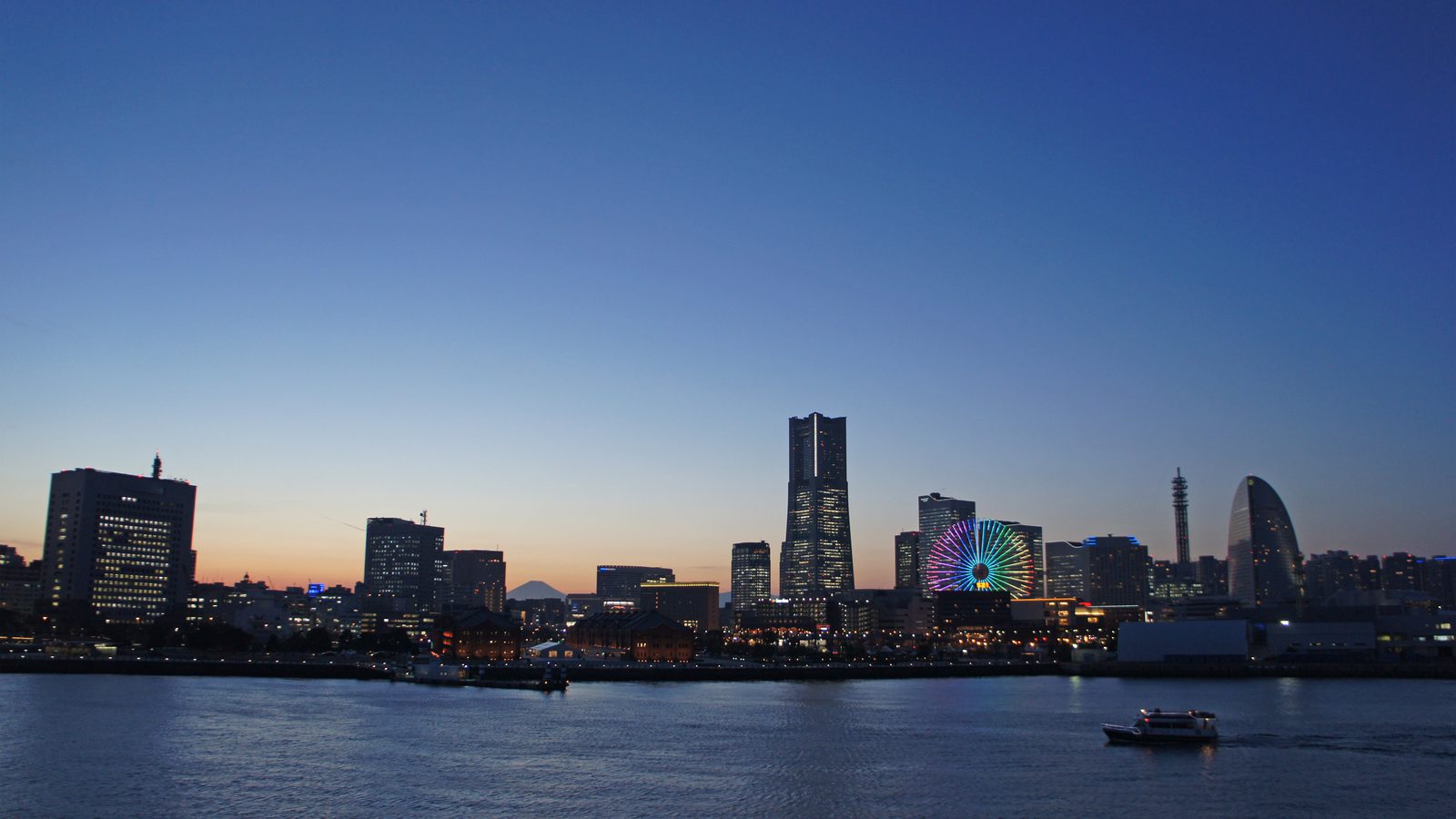
Photo: Yokohama cityscape / 淳平 筈井 (CC BY 2.0) via Wikimedia Commons
Where to Stay for GREEN×EXPO 2027 in Yokohama: Best Hotel Areas, a 2-Day Plan and Booking Tips
GREEN×EXPO 2027 — the 2027 International Horticultural Exposition, known in Japanese as “Yokohama Hanahaku” (the Yokohama Flower Expo) — runs from March 19 to September 26, 2027, on the former Kamiseya Communications Facility site in Yokohama, about 100 hectares of land.
Here is the short version: booking a hotel and staying overnight is worth it if any of these describe you.
- You want to stay into the evening. The official FAQ lists opening hours of 9:30–21:30 (last entry 21:00), and several exhibits have night-time light effects planned
- You want to take your time. One night gives you the first evening and the next morning on a 100-hectare site
- You are traveling from far away or carrying luggage. Carry cases are not allowed into the venue (official FAQ), so you can leave your bags at the hotel and travel light
Room hunting has already started. Timed-entry and shuttle bus reservations opened on September 18, 2026, and on X (formerly Twitter) many people say business hotels around the opening day and the final day filled up soon after reservations opened (as of October 2026).
We start with the exhibits that reward an overnight stay, then move on to a 2-day plan, where to stay and booking tips. If you only need the hotel areas, jump to where to stay: hotel areas compared.
[Updated October 4, 2026] Added the planned direct buses from Yokohama Station, Shin-Yokohama Station, the central Yokohama waterfront and Haneda Airport, the luggage rules, a 2-day plan, and the Sotetsu Line towns as a fourth area.
The short answer: stay where you can easily reach a shuttle station or a planned direct bus
There is no railway station at the venue. If you come by train, the basic route is a reservation-only shuttle bus from one of four stations: Seya, Mitsukyo, Tokaichiba and Minami-machida Grandberry Park (see the access guide).
On top of that, the official access page says direct buses are planned from Shin-Yokohama Station, Yokohama Station, the central Yokohama waterfront (Minato Mirai and Kannai) and Haneda Airport. Operators, timetables, fares and booking are still being arranged (checked October 4, 2026).
So the quickest way to choose a hotel is to work backward from these two kinds of departure points. The four candidate areas are below; a table comparing routes and who each area suits comes further down.
- Yokohama Station, Minato Mirai and Kannai: the widest range of hotels, with direct buses planned. Easy to combine with sightseeing in Yokohama
- Shin-Yokohama: for Shinkansen arrivals. The JR Yokohama Line runs to Tokaichiba, and the Sotetsu Shin-Yokohama Line toward Mitsukyo and Seya
- Sotetsu Line towns (Futamatagawa, Yamato, Ebina and others): close to Seya, which has the shortest shuttle ride (about 10 minutes)
- The Machida area (Machida, Minami-machida Grandberry Park): convenient from central Tokyo and the Tama area; the shopping complex at Minami-machida Grandberry Park Station helps with kids
Why stay overnight: highlights that reward a night in Yokohama
Too big for one day
Start with the size. The site covers about 100 hectares, and the Japan Pavilion and Garden alone takes up about 2.5 hectares, the largest exhibit on the grounds. Our pavilion list already covers 31 exhibits, from the organizer’s theme and horticulture pavilions to corporate Village exhibits, an observation terrace and a living wall, each very different in character.
Then add 391 flower and garden exhibitors (as of September 15, 2026: 178 outdoor, 21 indoor for the full period and 227 short-term indoor, with overlaps). Every prefecture and every designated city takes part, and the short-term indoor exhibits change by exhibition week. The government magazine HIGHLIGHTING Japan (May 2026) says the site will bring together ten million flowers and much other greenery, with around 600 cherry trees of 40 varieties welcoming visitors at the March opening.
Honestly, that is a lot for one day. A night’s stay gives you two blocks of time: the first afternoon and evening, and the next morning.
Evening (17:00–21:30): go for the light
The official FAQ lists opening hours of 9:30–21:30, with last entry at 21:00 (hours may vary by day; the final event outline is still to come). An evening ticket allows one entry from 17:00, and the 17:00 timed-entry slot can also be booked with a one-day ticket or a season pass (association announcement, August 27, 2026).
These are the main spots with night-time features announced so far. Seeing them after dark is the best reason to stay.
- Daiwa House Group Endless Heart Park (Urban GX Village): an outdoor space with 35 glass “parasols,” 2.3 m across and topped with water. By day, colored light filtered through the moving water falls on the ground; at night, lighting turns it into a different space
- TAISEI GREEN TERRACE (center of the site): a wooden observation terrace with a ramp about 90 m long and a viewing height of about 4.5 m. Flower beds and photo-lined floors by Mika Ninagawa with EiM are joined by an LED installation below the terrace, planned to show different scenes by day and night (details not yet announced)
- Projection mapping on the former ammunition depot: images and sound by Mika Ninagawa with EiM will be projected onto a former earth-covered ammunition depot on the site to light up the Expo at night (sponsored by the Bank of Yokohama; association, September 15, 2026; dates and times not yet announced. See the Bank of Yokohama GREEN WALL)
- null⁴ (TetraNull) (SATOYAMA Village): Yoichi Ochiai’s rotating mirrored “landscape-transforming sculpture.” The artwork’s website shows it picking up the colors of flowers by day, reflecting the sky at dusk and becoming a sculpture of light at night
Glass parasols and mirrored sculptures you saw in daylight take on a different look after dark — exactly the hours a long-distance day trip tends to miss.
The association has also said that lighting up the Main Garden is being considered (June 12, 2026). Many night-time features have no dates or times yet, so check the official announcements before you go.
On a day trip from far away, you have to leave the venue in time for your train or flight home. With a hotel booked, you can stay until closing and simply ride the shuttle back to the station. The four-station shuttles are planned to run from about 8:30 to 22:30 (Visitor Transport Plan, 3rd edition).
Morning (from 9:30): take your time with the plants
On day two you can start from the earliest timed-entry slot, 9:30. Mornings are a good time for the exhibits run by the organizer and for the Japan Pavilion and Garden.
- Theme Pavilion “NEKKO”: six zones built around the concept “All life is connected, with plants at the heart.” ZONE 1 shows the real roots of the “Miracle Pine” of Rikuzentakata, which survived the 2011 tsunami, inside a show of sound, light and images representing fungal networks. ZONE 2 is a vast indoor planting area with laurel forest over 5 m tall and life-size models of plants such as Rafflesia
- Horticultural Pavilion “IROHA-GARDEN”: a recreated Edo-period plant nursery and flower garden, with traditional horticultural plants rotated by season. The official display schedule includes camellias, cherry and bonsai in March; peonies, azaleas and wisteria in April–May; Japanese irises in June; morning glories and lotus in July–August; and chrysanthemum figures in September, among others. A large Kirishima azalea from Noto and potted wisteria from Ashikaga Flower Park are planned to be on loan
- Japan Pavilion and Garden: the largest exhibit at about 2.5 hectares. Bonsai long kept by the Imperial Household Agency at the Imperial Palace will be rotated twice during the Expo. Three have been announced: the Japanese black pine “Kashima” (390 years old, also shown at Expo ‘70 in Osaka), a Japanese cypress (340 years) and the Japanese white pine “Neagari” (390 years), the last two never before shown outside the palace. Ikebana by the major schools also changes by period
A 390-year-old black pine, the roots of a pine that survived a tsunami: these are exhibits to take your time over in the morning, not to rush through just before closing.
Apart from merchandise, these three charge nothing beyond your admission ticket. Whether they need reservations, and how, is still under consideration (official FAQ, checked October 4, 2026).
Two days means seeing the same places by day and by night
The real bonus of staying over is seeing exhibits that change with the time of day twice.
- At the TAISEI GREEN TERRACE, the scenery is said to change with plant growth, the seasons and the light at different times of day (Taisei, September 15, 2026). See the LED installation under the terrace on the first night, then look out over the flowers from the top the next day
- null⁴ and the Endless Heart Park also look different by day and by night
- Same-day “viewing reservations” for some exhibits allow one exhibit per ticket per day. The target exhibits are not yet announced, but two days give you two chances
- On a weekend stay, the “Minna no Bon Odori” dancing at Meiji Yasuda “Kenkatsu Park” is planned every weekend (times not yet announced)
- If you stay in Minato Mirai, null²ⁿ (Null Null Nexus), a permanent theater that serves as a prelude to null⁴, is scheduled to open on October 14, 2026 on the 5th floor of Yokohama Landmark Plaza (a separate facility with its own fully timed, advance-booked tickets; about 60 minutes). Avatars from the Mirrored Body app are planned to sync with both sites, so you could do null²ⁿ in Minato Mirai one evening and null⁴ at the venue the next day
A 2-day plan: afternoon to night, then morning to afternoon
Here is one example for an overnight trip from far away. Many booking methods and night-time schedules are not yet announced, so adjust as details come out. For other durations and travel styles, see the model itineraries.
| Time | Day 1 (afternoon into the night) |
|---|---|
| Midday | Arrive at your hotel’s station and drop your bags (carry cases are not allowed into the venue) |
| 14:30 or 17:00 | Enter (the 14:30 slot with a one-day ticket, or the 17:00 slot with an evening ticket; one-day tickets can also book 17:00) |
| Late afternoon | Urban GX Village: the ride-through exhibit at Mitsubishi Minnano Miraikan, OBAYASHI MORI SORA MIRAI, and KAJIMA TREE, a timber tower about 60 m tall |
| After dark | Lighting at the Endless Heart Park, the LED installation at the TAISEI GREEN TERRACE, null⁴ at night, and projection mapping on the former ammunition depot (dates not yet announced) |
| 21:30 | Closing. Take your booked return shuttle to the station and head to the hotel |
| Time | Day 2 (morning to afternoon) |
|---|---|
| From 8:30 | Shuttles are planned to start running. Take one that gets you in for the 9:30 slot |
| From 9:30 | Theme Pavilion “NEKKO” → Horticultural Pavilion “IROHA-GARDEN” → Japan Pavilion and Garden (on the association’s site map, NEKKO is in the north, IROHA-GARDEN to its southeast and the Japan Pavilion and Garden along the Izumi River in the south, so you walk north to south) |
| Lunch | Farm & Food Village, where the JA Group’s market and fresh juice stand and a Daily Yamazaki store next to Yamazaki’s pavilion are planned |
| Afternoon | See null⁴ in daylight and compare it with the night before. Climb the TAISEI GREEN TERRACE for a view of the whole site |
| Departure | Take the return shuttle you booked to match your train or flight |
With kids, you could spend the second morning in the Kids Village instead. At SOTETSU PARK, Sotetsu displays a real car of its new 13000 Series train, with a recreated inspection pit planned so visitors can see the underfloor.
Where to stay: hotel areas compared
Here are the four areas by route to the venue and who they suit. Shuttle times are estimates from the official Visitor Transport Plan (3rd edition) and vary with road traffic.
| Area | Main route to the venue | Shuttle station (approx. shuttle time) | Direct bus (planned) | Best for |
|---|---|---|---|---|
| Yokohama Station, Minato Mirai, Kannai | Sotetsu Main Line from Yokohama | Seya (10 min), Mitsukyo (15 min) | From Yokohama Station; a loop route around the waterfront | The widest hotel choice, sightseeing, arrivals from Haneda |
| Shin-Yokohama | JR Yokohama Line, or the Sotetsu Shin-Yokohama Line onto the Sotetsu Main Line | Tokaichiba (25 min) / Mitsukyo, Seya | From Shin-Yokohama Station | Shinkansen arrivals |
| Sotetsu Line towns (Futamatagawa, Yamato, Ebina, etc.) | Sotetsu Main Line | Seya (10 min), Mitsukyo (15 min) | None announced | An early start with the shortest shuttle ride |
| Machida area (Machida, Minami-machida Grandberry Park) | JR Yokohama Line, or the Tokyu Den-en-toshi Line | Tokaichiba (25 min), Minami-machida Grandberry Park (20 min) | None announced | Arrivals from central Tokyo or the Tama area, families |
Operators, timetables, fares and booking for the direct buses are still being arranged (official access page, checked October 4, 2026). For now, plan around the four-station shuttles and switch if the direct-bus details suit you.
Yokohama Station, Minato Mirai and Kannai: the most hotels, and direct buses planned
The area around Yokohama Station, Minato Mirai and Kannai offers everything from business hotels to full-service city hotels. From Yokohama Station, the Sotetsu Main Line runs to Mitsukyo and Seya without a transfer (stops depend on the train type, so check a route planner).
The direct buses are the big plus. According to Yokohama City’s September 29, 2026 announcement, in addition to direct buses from Yokohama Station, Shin-Yokohama Station and Haneda Airport, a bus linking the venue directly with the central waterfront is also planned. Its route is planned to loop past Sakuragicho Station, major hotels in Minato Mirai, Yokohama Hammerhead, the Red Brick Warehouse, BASEGATE Yokohama in Kannai, Rose Hotel Yokohama near Motomachi and Chinatown, and Hotel New Grand on Yamashita Park Avenue. On X, some people point to this announcement and recommend staying near Yokohama Station, Minato Mirai or Shin-Yokohama for luggage and access (as of October 2026).
It is the easiest base if you want dinner and shopping in the evening or plan to combine the Expo with sightseeing. null²ⁿ at Yokohama Landmark Plaza, mentioned above, is in this area too.
Note that the 11th Pacific Islands Leaders Meeting (PALM11) will be held in Yokohama around summer 2027 (Yokohama City, June 17, 2026; dates not yet announced). If you plan a summer stay in central Yokohama, check whether the dates overlap once they are out.
Shin-Yokohama: the natural choice for Shinkansen arrivals
Shin-Yokohama is a Tokaido Shinkansen stop, which makes it easy to step off the train, check in, and head to the venue the next morning. There are two ways to get there.
- JR Yokohama Line to Tokaichiba: the simple basic route. The shuttle from Tokaichiba takes about 25 minutes, the longest of the four
- Sotetsu Shin-Yokohama Line onto the Sotetsu Main Line: some trains from Shin-Yokohama run through Nishiya onto the Sotetsu Main Line, taking you toward Mitsukyo (shuttle about 15 minutes) and Seya (about 10 minutes). Destinations and stops vary by train, so check a route planner
A direct bus from Shin-Yokohama Station is also planned (details still being arranged). If you are combining the trip with another city on your first or last day, the small number of transfers pays off.
Sotetsu Line towns (Futamatagawa, Yamato, Ebina): closest to Seya and Mitsukyo
The Sotetsu Main Line runs from Yokohama through Nishiya, Tsurugamine, Futamatagawa, Kibogaoka, Mitsukyo, Seya and Yamato to Ebina. Yamato is the next station after Seya, Futamatagawa is two stops before Mitsukyo, and Ebina is the end of the line.
- Of the four shuttle stations, Seya has the shortest ride (about 10 minutes), followed by Mitsukyo (about 15 minutes)
- Yamato also connects with the Odakyu Enoshima Line, and Ebina with the Odakyu Odawara Line and the JR Sagami Line, which helps if you are coming from those directions
- Rather than limiting yourself to one station, widen your search to several, such as Futamatagawa, Yamato and Ebina, all of which make Seya and Mitsukyo easy to reach
Sotetsu has promoted the Expo with special station signs at Seya and Mitsukyo, and SOTETSU PARK at the venue features a real 13000 Series train — a fun line for railway-loving families.
The Machida area (Machida, Minami-machida Grandberry Park): from central Tokyo, and good with kids
Minami-machida Grandberry Park Station (Tokyu Den-en-toshi Line) is one of the four shuttle stations, with a ride of about 20 minutes. The large Grandberry Park shopping complex by the station gives you somewhere to eat or shop while you wait, and the Den-en-toshi Line runs straight from the Shibuya direction. The GREEN LIFESTYLE TRAIN, a wrapped train themed on the Tokyu Group Pavilion, is planned to run on the line until September 2027.
Neighboring Machida is a hub for the JR Yokohama Line and the Odakyu Line, with its own dining and lodging options. From Machida, the JR Yokohama Line takes you to Tokaichiba (shuttle about 25 minutes). You can enter from the west or northeast side without passing through central Yokohama, which makes this area worth considering if you are coming from central Tokyo or the Tama area.
Arriving by air (Haneda, Narita)
A direct bus from Haneda Airport is planned (details still being arranged). Until those details are out, plan on the basic route: head from Haneda toward Yokohama, then take the Sotetsu, JR Yokohama or Tokyu Den-en-toshi Line to one of the four stations. From Narita Airport, first head toward Tokyo or Yokohama, then aim for the four stations in the same way (see the access guide). If you want to drop your bags at the hotel on arrival day, Yokohama Station and Minato Mirai, where direct buses are also planned, make an easy base.
Hotel booking tips: peak days, the order to book, and cancellation rules
The 19 official peak days, and other dates when rooms go fast
The official access page lists 19 peak days (checked October 4, 2026). The Visitor Transport Plan (3rd edition) expects 105,000 visitors on each of these days, roughly twice the weekday estimate of 50,000–56,000.
- April 29; May 2, 3, 23, 29 and 30
- June 6 and 13
- August 14 and 15
- September 4, 11, 12, 18, 19, 20, 23, 25 and 26
The calendar adds a few more dates when rooms are likely to move quickly.
- Right after opening: opening day, Friday March 19, is followed by Saturday the 20th, the Vernal Equinox Day holiday on Sunday the 21st and a substitute holiday on Monday the 22nd (National Astronomical Observatory of Japan calendar)
- Golden Week: in 2027 the holidays run five days in a row, from Saturday May 1 to Wednesday May 5
- Before closing: September is packed with peak days, and September 18–20 is a three-day weekend including Respect for the Aged Day
- Late May: the peak days of May 29 and 30 fall during Yokohama City’s “YOKOHAMA GREEN CHALLENGE WEEK” (May 26 to June 1), with a parade, live music and more planned across the venue
On X, people say rooms around the opening day and the final day filled up soon after reservations opened, that hotels near the venue were already gone, and that prices are higher than usual (as of October 2026).
Book in this order: timed entry, then shuttles both ways, then the hotel
For a 2-day trip, this order makes things easier.
- Timed-entry reservation (see the reservation guide): first come, first served. One-day tickets allow up to three date or time changes, and you can enter any time after your slot starts. For a 2-day trip, the 14:30 or 17:00 slot on day one and the 9:30 slot on day two work well
- Shuttle bus, outbound and return (see the shuttle bus & parking guide): this uses a separate booking system from the tickets, and you can book one outbound and one return trip per day. If you are staying until closing, choose a return time after the venue closes. On X, some say return slots are filling up too, so it is safest to book both directions together
- Hotel: check the free-cancellation deadline so you can move your room if you change your entry date
That said, as mentioned above, some people report rooms around the opening and final days filling up first. If you are aiming for dates like those, consider holding a room on a free-cancellation rate while you book your entry.
Don’t miss the shuttle’s “provisional booking” payment window
According to the official FAQ, shuttle bookings made 181 or more days before the travel date are provisional, and must be paid by credit card between 180 and 31 days before the travel date. Unpaid provisional bookings are canceled automatically.
- Example: for a ride on May 3, 2027 (a peak day), the payment window runs from November 4, 2026 to April 2, 2027
- Cancellations are free until 17:00 the day before. After that and until 5 minutes before the meeting time, the fee is 50% of the fare; within 5 minutes of the meeting time, you cannot cancel
Handy tool: our visit planner (in Japanese) lists payment windows and free-cancellation deadlines as dates for your visit date and station, and lets you add them to your calendar.
Tickets for a 2-day trip
A one-day ticket is good for one entry, so entering on both days needs two days’ worth of tickets. If day one starts at 17:00, the evening ticket (¥3,500 for adults) is an option, but it is sold only during the Expo period. To secure a day-one evening entry now, you can book the 17:00 slot with a one-day ticket. If you plan several visits, compare the season and summer passes as well (see the ticket guide).
Tools for finding a room (hotel map, packages, booking sites)
EXPO COMPASS hotel map (unofficial, in Japanese)
The hotel map on EXPO COMPASS, an independently run unofficial site, plots properties listed on Rakuten Travel within about 20 km of the venue. You can compare prices and availability, estimated total travel time (walking, train and shuttle combined) and the transfers needed to reach a shuttle station. It updates every three hours for busy periods and once a day for the whole period, and states that it is not affiliated with the Expo association or Rakuten Group (checked October 4, 2026).
Travel agency packages with admission
If you would rather book admission together with your room and transport, travel agency products are another option. On the association’s list of ticket sellers (updated October 1, 2026), agencies such as Hankyu Travel, JTB, Nippon Travel Agency, H.I.S., Club Tourism and Kinki Nippon Tourist are marked as selling “travel products with tickets.”
For example, JTB’s GREEN×EXPO 2027 page (in Japanese) combines online sales of official admission tickets with hotel plans in three areas: Yokohama / Chinatown / Minato Mirai, Shin-Yokohama / Aobadai / Hiyoshi / Tsurumi, and Kawasaki (checked October 4, 2026). Whether a product includes lodging, its sales status and its conditions vary, so check each company’s page.
Tips for searching booking sites
- Search by station name (Yokohama, Shin-Yokohama, Ebina, Yamato, Machida and so on) rather than by area
- On the map, check the transfers from your hotel’s nearest station to a shuttle station (or a direct-bus stop)
- Check the free-cancellation deadline and whether you can leave luggage before check-in and after check-out (carry cases are not allowed into the venue)
- Room rates change by date, so compare peak days with the weekdays around them
Once your area and dates are settled, all that is left is to check availability.
FAQ
Which area should I stay in for GREEN×EXPO 2027?
There is no station at the venue, so the practical choice is a town with easy access to the four shuttle stations (Seya, Mitsukyo, Tokaichiba and Minami-machida Grandberry Park) or to the planned direct buses (from Yokohama Station, Shin-Yokohama Station, the central Yokohama waterfront and Haneda Airport). The four candidate areas are Yokohama Station / Minato Mirai (the widest choice of hotels, with direct buses planned), Shin-Yokohama (on the Shinkansen), the Sotetsu Line towns such as Futamatagawa, Yamato and Ebina (closest to Seya and Mitsukyo, which have the shortest shuttle rides) and the Machida area (convenient from central Tokyo and the Tama area). Operators, timetables, fares and booking for the direct buses are still being arranged (checked October 4, 2026).
When should I book a hotel for GREEN×EXPO 2027?
As soon as your dates are set. Timed-entry and shuttle reservations opened on September 18, 2026, and on X (formerly Twitter) many people say rooms around the opening day and the final day filled up soon after reservations opened (as of October 2026). Move especially early for the 19 official peak days (April 29; May 2, 3, 23, 29 and 30; June 6 and 13; August 14 and 15; September 4, 11, 12, 18, 19, 20, 23, 25 and 26) and the three-day weekend right after opening (March 20–22), and check each room’s free-cancellation deadline.
How late is GREEN×EXPO 2027 open, and what is there to see at night?
The official FAQ lists opening hours of 9:30–21:30 (last entry 21:00; hours may vary by day), and an evening ticket allows entry from 17:00. Planned night-time features include lighting at the Daiwa House Group Endless Heart Park, an LED installation under the TAISEI GREEN TERRACE and projection mapping by Mika Ninagawa with EiM on a former earth-covered ammunition depot (some dates and details are not yet announced). The four-station shuttle buses are planned to run until about 22:30.
Can I bring a suitcase into the venue or onto the shuttle bus?
Not if it has wheels. According to the official FAQ, carry cases and carts are prohibited in the venue regardless of size, and items larger than what the X-ray scanners can handle (600 mm wide × 400 mm high × 900 mm deep) are not allowed. Visitors are also asked not to bring large luggage onto the shuttle buses and to leave it in lockers beforehand. Plan to drop your bags at your hotel before heading to the Expo.
How do I get to the venue from Shin-Yokohama?
The basic route is the JR Yokohama Line to Tokaichiba Station, then the shuttle bus (about 25 minutes). Trains on the Sotetsu Shin-Yokohama Line that run through Nishiya onto the Sotetsu Main Line can also take you toward Mitsukyo (shuttle about 15 minutes) and Seya (about 10 minutes); destinations and stops vary by train. A direct bus from Shin-Yokohama Station is also planned (details still being arranged).
Light shows in the evening, plants in the morning: getting both is what an overnight stay adds to the Expo. For the full route picture see the access guide, for choosing a shuttle station see the four-station comparison, and for an overview of the exhibits see the highlights guide.
Sources
- Expo Association: Access to the venue (four-station shuttles, planned direct buses, 19 peak days) (checked 2026-10-04)
- Expo Association FAQ: Tickets (opening hours, last entry, viewing reservations, reservations and fees for the theme pavilion and others) (checked 2026-10-04)
- Expo Association FAQ: Operations (large luggage, carry cases) (checked 2026-10-04)
- Expo Association FAQ: Transport (provisional shuttle bookings and payment window) (checked 2026-10-04)
- Expo Association: Visitor Transport Plan, 3rd edition (shuttle times, operating hours, daily visitor estimates; PDF) (checked 2026-10-04)
- Expo Association press release, August 27, 2026 (timed-entry slots and ticket types, viewing reservations; PDF) (checked 2026-10-04)
- Expo Association: Admission ticket system, 3rd edition (evening tickets sold only during the Expo; PDF) (checked 2026-10-04)
- Expo Association: Ticket sellers (list PDF updated October 1, 2026) (checked 2026-10-04)
- Expo Association: Flower and garden exhibits (391 exhibitors as of September 15, 2026) (checked 2026-10-04)
- Expo Association press release, September 15, 2026: official creator Mika Ninagawa’s projects (projection mapping, TAISEI GREEN TERRACE; PDF) (checked 2026-10-04)
- Expo Association press release, June 12, 2026 (Main Garden lighting under consideration; PDF) (checked 2026-10-04)
- Taisei, September 15, 2026: TAISEI GREEN TERRACE collaboration with Mika Ninagawa with EiM (checked 2026-10-04)
- null4 artwork website and joint press release, July 14, 2026 (null²ⁿ opening and link with null⁴; PDF) (checked 2026-10-04)
- Yokohama City press release, September 29, 2026: six-months-to-go media event (planned direct-bus route, YOKOHAMA GREEN CHALLENGE WEEK; Japanese) (checked 2026-10-04)
- Yokohama City press release, June 17, 2026: PALM11 to be held in Yokohama (Japanese) (checked 2026-10-04)
- National Astronomical Observatory of Japan: 2027 calendar, national holidays (Japanese) (checked 2026-10-04)
- Sotetsu: stations and timetables (order of stations on the Main Line; Japanese) and Sotetsu press release, December 16, 2022: Sotetsu-Tokyu through service plan (through trains from Shin-Yokohama onto the Main Line; PDF, Japanese) (checked 2026-10-04)
- JTB: GREEN×EXPO 2027 guide (Japanese) (checked 2026-10-04)
- EXPO COMPASS hotel map (unofficial; Japanese) (checked 2026-10-04)
- HIGHLIGHTING Japan, May 2026 (ten million flowers, cherry trees at the opening) (checked 2026-10-04)
- Exhibit details follow the primary sources cited on each pavilion page (Theme Pavilion “NEKKO”, Horticultural Pavilion “IROHA-GARDEN”, Japan Pavilion and Garden, Endless Heart Park, TAISEI GREEN TERRACE, null⁴, OBAYASHI MORI SORA MIRAI, Tokyu Group Pavilion, SOTETSU PARK and others)
- Comments from X (formerly Twitter) summarize trends in posts found on October 4, 2026 by searching Japanese terms for “Expo hotel,” “Yokohama Flower Expo lodging” and “Horticultural Expo hotel booking”; no individual posts are reproduced
This site is an unofficial summary. Always confirm the final details on lodging, access and reservations through official announcements and each facility’s or company’s own information.