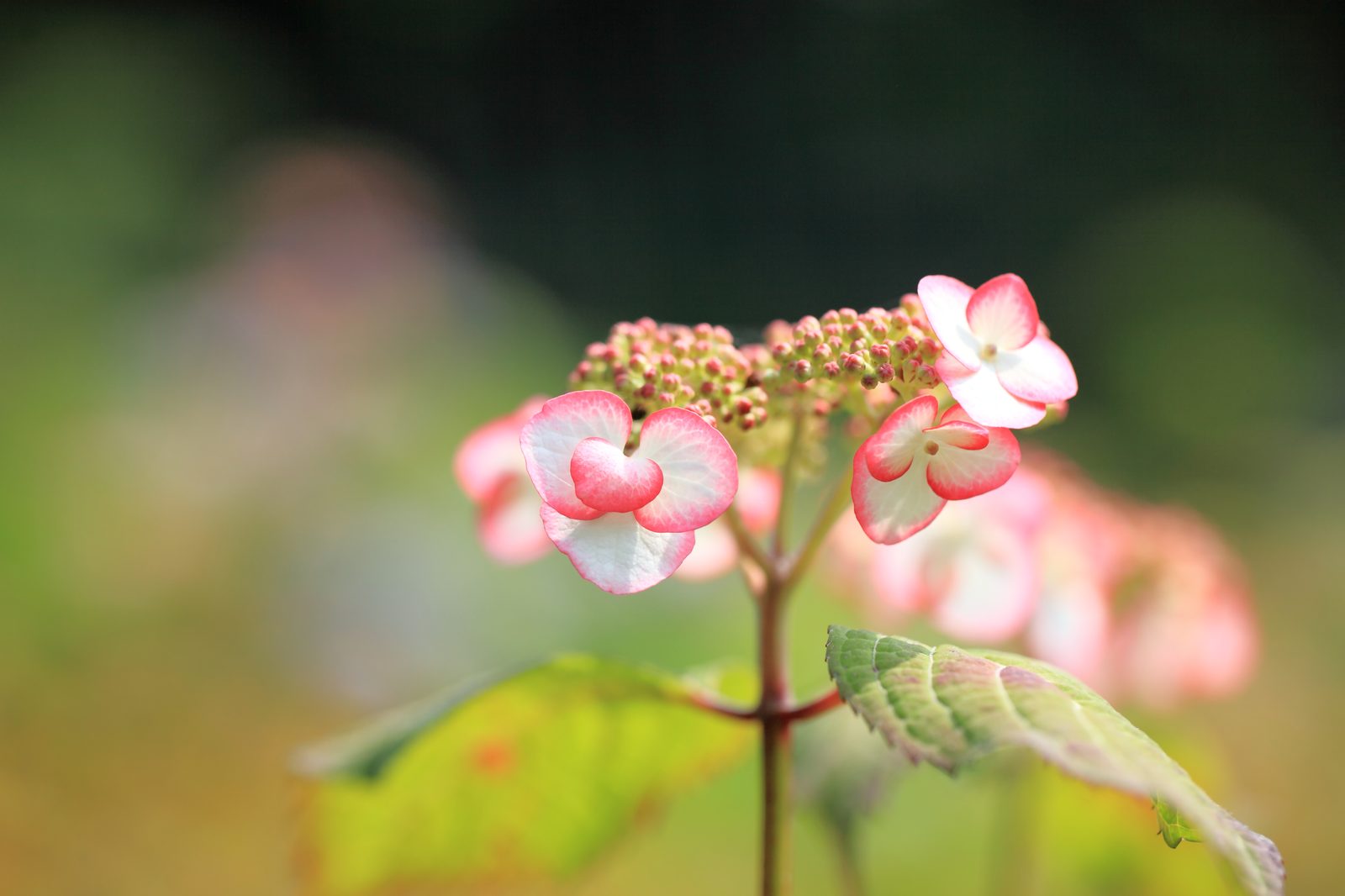
Photo: Hydrangea / TANAKA Juuyoh (田中十洋) from Japan (CC BY 2.0) via Wikimedia Commons
GREEN×EXPO 2027 FAQ: What to Know Before You Go
This guide gathers the questions worth settling before you visit GREEN×EXPO 2027 (the 2027 International Horticultural Exhibition), grouped into four topics: tickets, the flow of the day, what you can bring (plus re-entry), and beating the crowds.
This is an unofficial summary, and it keeps confirmed details clearly separate from the parts not yet announced, so you can use it as a pre-trip checklist.
The basics of the event:
- Dates: Friday, March 19 to Sunday, September 26, 2027 — a 192-day run
- Venue: the former Kamiseya Communications Facility site in Asahi and Seya wards, Yokohama — roughly 100 hectares of open ground
- Theme: “Scenery of the Future for Happiness”
With an event this large, the questions pile up fast: When should I buy tickets? How long does it take to get around? What do I need to bring? Let’s take them in order.
Ticket and reservation questions (early-bird, season pass, date-time reservation)
The first thing most people ask about is tickets. Prices vary clearly by type.
| Ticket type | Adult | Youth (12–17) | Child (4–11) |
|---|---|---|---|
| Early-bird (advance) | ¥4,900 | ¥3,000 | ¥1,400 |
| Standard (during the expo) | ¥5,500 | ¥3,300 | ¥1,500 |
| Season pass | ¥28,000 | ¥16,000 | ¥6,500 |
Children aged 3 and under are free; age bands are judged as of April 1, 2027 (official FAQ). The early-bird saves an adult ¥600 over the standard in-period price — over ¥2,000 for a family of four — so if you’ve decided to go, locking in an advance ticket is the easy win.
Don’t count on buying a same-day ticket at a gate window, though: the official FAQ lists same-day tickets as “planned, details to be decided,” so walk-up sales at the venue are not yet confirmed.
Advance tickets go on sale on March 19, 2026, exactly one year before opening. The key points on ticket types:
- For now, tickets carry no date restriction, so they aren’t tied to a specific day
- If you plan to come back repeatedly, the season pass is an option that pays for itself after a handful of visits
- A summer pass (¥12,000 for adults, valid July 1 – August 31) and an evening ticket (¥3,500 for adults, entry from 5 pm) are also available
For the break-even math on each type and how to choose, see the full ticket guide.
Date-time reservations (open since September 18, 2026)
One caveat here. The tickets themselves are undated, but the date-time reservation system — booking the day and time you plan to arrive — opened on Friday, September 18, 2026 and is now being accepted (official announcement). The steps are in the how to make a timed-entry reservation.
- One rule is already fixed: you can change your reserved slot up to three times
Our date reservation guide covers the confirmed rules and how to prepare — and always check the latest official guidance before you go.
The flow of the day and how long to allow (entry to exit)
“Will it take a whole day? Can I do it in half?” is another common question. The short answer: to enjoy the major pavilions and the floral highlights properly, allow half a day at minimum and ideally a full day.
The site is about 100 hectares — larger than 20 Tokyo Domes — so simply walking from one end to the other covers serious ground, and the highlights are spread out. The main ones:
- Japan Pavilion and Garden (about 2.5 hectares) — the largest, built around the concept “Reconsidering the Japanese View of Nature, Moving Toward the Future,” with an immersive theater that’s an experience in itself
- The Theme Pavilion “NEKKO” (how plants connect all life, and Nature-based Solutions) and the Horticultural Pavilion “IROHA-GARDEN” (Japan’s horticultural culture)
- Corporate pavilions from the likes of Obayashi, Mitsubishi, Kajima, and Daiwa House
- 71 countries plus 5 international organizations that have announced participation (official list dated August 4, 2026)
Seeing everything at a rush is a tall order. So far the UK has announced a British garden (press release, July 31, 2026) and Italy plans to reuse parts of its Expo 2025 Osaka pavilion (press release, July 13, 2026); other countries’ exhibits have not been published.
Roughly, the day goes like this.
- Train to the nearest station — the four hubs are Seya, Mitsukyo, Tokaichiba, and Minami-machida Grandberry Park
- Shuttle bus to the venue — reservation only; there is no station right beside the grounds
- Entry at the gate — date-time reservations have been open since September 18, 2026, and a check of your reservation is likely to be added (operational details to be announced)
- Tour the pavilions and flower fields — start with what interests you most
- Shuttle back to a station — the return uses the same four stations
The entrance gate will be consolidated into a single location (per the Association’s briefing for the travel industry; TrabelVoice, October 8, 2026, confirmed October 7). The distance from the north car park to the gate is approximately 200–700 m, and from the west car park approximately 1–1.5 km. The finer security steps and whether timed-entry passes apply inside are still to be announced. Since station access drives much of your total time, see the full access guide before you set off.
What can you bring, re-entry, and rainy days? (the basics of packing)
“Can I bring my own lunch?” “Can I leave and come back?” “Is it open in the rain?” — much of this has not been finalized officially.
Restrictions on what you can bring, whether re-entry is allowed, and the details of restaurants and shops are all still to be announced, so we’ll set out rough guidance rather than stating anything as fact.
The basics of packing come down to heat and weather. The venue is built around flower fields and gardens, so you’ll spend a long time outdoors with little shade, and the season spans spring through the height of summer — so what you carry shifts with the time of year.
- Comfortable walking shoes — the single most important item across 100 hectares; bring broken-in sneakers
- Parasol, hat, sunscreen — close to essential in summer given the lack of shade
- A reusable bottle and water — carry plenty in midsummer to guard against heatstroke
- Rain gear — a rain jacket or folding umbrella for the June rainy season and sudden showers
- A power bank — reservations, maps, and photos drain a phone fast
For season-by-season detail on clothing and beating the heat, see the what to bring, clothing and heat guide. The July–September heat in particular makes a huge difference to comfort depending on how you prepare, so anyone going in summer should read it first.
On rain: a horticultural expo is the kind of outdoor event that generally runs whatever the weather, but how severe weather is handled and whether some displays are affected will need to wait for official guidance.
Confirmed details — including whether re-entry is allowed — should be checked against the official announcements.
How not to get caught out (avoiding crowds, reservations, preparation)
Finally, some practical tips so the day runs smoothly.
When you go changes the experience enormously. The official day-by-day projections expect roughly 50,000–56,000 visitors on weekdays, about 79,000 on weekends and holidays, and up to about 105,000 at peak times such as Golden Week and the September holidays.
The calmer windows are weekdays from Tuesday to Thursday, plus right after opening and toward the evening. The rainy season and the hottest stretch also tend to be quieter. For a detailed outlook, see the crowd forecast.
Both the shuttle and the car parks are reservation only — worth repeating as many times as it takes. You cannot simply turn up on the day and expect to park or board.
- The basic route is the train plus the four-station shuttle
- If you drive, there are venue car parks (about 5,690 car spaces to the north plus about 540 to the west, per the 3rd-edition transport plan)
- Park-and-ride is offered for peak periods (Aeon Mall Yamato / Ito-Yokado Yamato-Tsuruma and the Sagami-ono multi-storey car park) — but all of it assumes a booking
Reservations have been open since September 18, 2026, so check the full access guide for the latest method before you set off.
Your pre-trip checklist comes down to three things.
- Secure tickets early — early-bird beats the standard in-period price; tickets are undated, but date-time reservations have been open since September 18, 2026
- Decide how you’ll get there — which of the four stations to enter from, and shuttle versus car park
- Pack for the season — comfortable shoes year-round, heat protection in summer, plenty of rain gear in the rainy season
Which flowers are at their peak when you go also shapes the experience. As a general guide for the Kanto region:
- Tulips: late March into April
- Nemophila: April
- Roses: mid-May into June
- Hydrangeas: June
- Sunflowers: late July into August
- Cosmos: September
The venue’s planting plan awaits official release, but working backward from the flower you most want to see is a smart way to pick your date.
To start with the big picture and the highlights, see What is GREEN×EXPO 2027?; for choosing a ticket, the full ticket guide; and for getting there, the full access guide. Once you’re prepared, even a venue this large is easy to enjoy across a full day.
This is an unofficial summary. Always confirm the final details on tickets, reservations, and what you can bring against the official announcements.