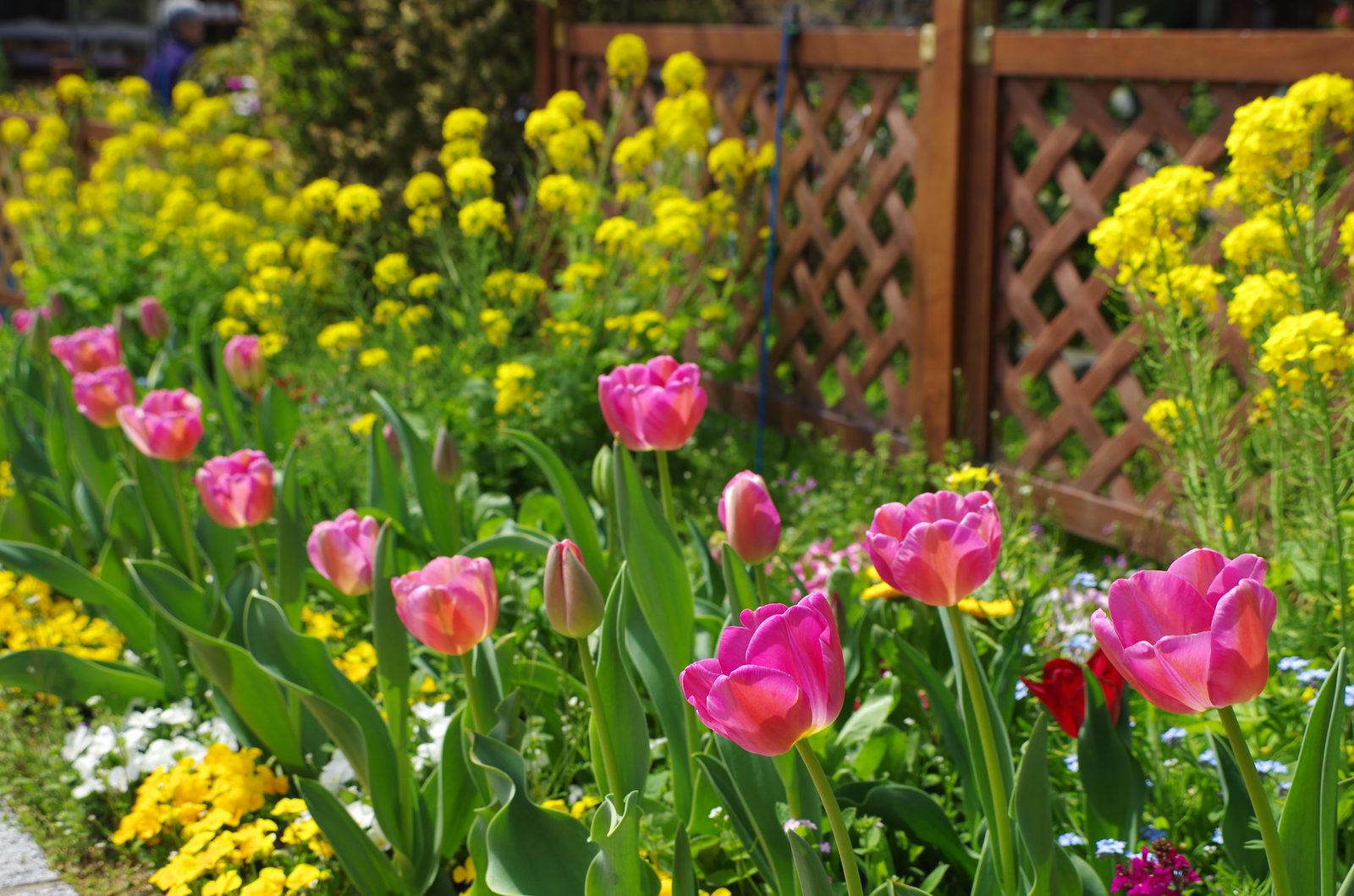
Photo: Japanese garden / Nankou Oronain (as36… (CC BY-SA 3.0) via Wikimedia Commons
How GREEN×EXPO 2027 Differs from Expo 2025 Osaka
If you enjoyed Expo 2025 Osaka, Kansai, it is easy to picture GREEN×EXPO 2027 (the 2027 International Horticultural Exposition) as more of the same. But the two events are quite different. In short, what opens in Yokohama is a flowers-and-greenery expo — not the kind of event where you line up for the latest high-tech attractions.
This guide compares GREEN×EXPO 2027 with Expo 2025 Osaka, Kansai (April 13 – October 13, 2025, on Yumeshima) and walks through the differences in venue, scale, theme, access, and the way reservations and crowds work. Then it gets practical about how someone who loved Osaka can get the most out of a horticultural expo. Note that this is an unofficial guide, so please confirm the final details with official sources before you plan your trip.
The bottom line: a flowers-and-greenery expo, not a ride-based one
Here is the short version first. GREEN×EXPO 2027 is an international horticultural exposition recognized as AIPH Class A1 — the highest rank. The stars of the show are flowers, greenery, and the relationship between people and nature. The Theme Pavilion “NEKKO,” built around the concept “All life is connected, with plants at the heart,” conveys the power of plants and ideas such as Nature-based Solutions (NbS) through exhibits, art, and hands-on experiences. Rather than “experience future technology as an attraction,” think of it as “walk through, and feel how everyday life and nature might fit together in the years ahead.” Going in with that mindset keeps the gap between expectation and reality small.
That is not to say there is little to see. The Japan Pavilion and Garden, the largest exhibit on the grounds at about 2.5 hectares, features an immersive theater under the concept “Reconsidering the Japanese View of Nature, Moving Toward the Future,” and corporate pavilions are being announced steadily. But the through-line is always horticulture and nature. Instead of expecting roller-coaster thrills, you will be more in tune with this expo by taking your time over the blooms in season, the garden views, and the planting traditions of different countries.
Venue, scale and theme (Kamiseya in Yokohama vs Yumeshima)
The clearest differences are location, scale, and theme. A table makes the outline easy to see.
| Item | GREEN×EXPO 2027 | Expo 2025 Osaka (for reference) |
|---|---|---|
| Venue | Former Kamiseya Communications Facility site, Asahi / Seya Ward, Yokohama | Yumeshima, Osaka |
| Area | About 100 hectares (expo zone) | — |
| Dates | March 19 – September 26, 2027 (192 days) | April 13 – October 13, 2025 |
| Theme | Scenery of the Future for Happiness | (the Osaka expo theme) |
| Classification | AIPH Class A1 / BIE recognized | BIE registered exposition |
The Yokohama venue, the former Kamiseya Communications Facility site, once served as a US military communications base. Across roughly 100 hectares you will find flower beds, gardens, and five “villages” — a setting with a completely different character from Yumeshima, the man-made island in the bay. The theme, “Scenery of the Future for Happiness,” points in a different direction too: less a festival of cutting-edge technology, more a picture of a future where nature and daily life come together as scenery.
The grounds are organized into five villages: Urban GX Village (cutting-edge technology), Craft Village (traditional crafts), Farm & Food Village (agriculture and food), Kids Village (next-generation education), and SATOYAMA Village (the rural satoyama landscape). Farm & Food Village, for example, is set to include JA Group’s “ITADAKIMASU: Bringing the Bounties of Nature to the Table,” Meiji Group’s “ORAGA VILLAGE — Hometown of the Future,” the Yamazaki “A Bright Table for Tomorrow” Pavilion, and Sakata Seed’s “Seed Journey” hall. There are also touches that carry over from the previous expo, such as Yasashiku Naritai STUDIO by Toho-Leo, which reuses the facade of Panasonic’s “The Land of NOMO” pavilion from Expo 2025 Osaka. For the big picture, see What is GREEN×EXPO 2027?. As of the official list dated August 4, 2026, 71 countries and 5 international organizations have announced participation. So far the UK has confirmed a British garden (press release, July 31, 2026) and Italy plans to reuse parts of the architecture and exhibits from its Expo 2025 Osaka pavilion (press release, July 13, 2026); the exhibits of other countries have not yet been published.
Access (no station at the gate, a 4-station shuttle)
The thing most likely to trip you up on the day is access — and this is a difference from the Osaka expo worth pinning down. There is no station right next to the Yokohama venue.
The organizers’ answer is a reservation-only shuttle bus linking four nearby stations to the grounds. The basic route is “train to the nearest station, then shuttle from there.”
- Sotetsu Main Line — Seya and Mitsukyo stations (from the southern side)
- JR Yokohama Line — Tokaichiba station (from the northeast)
- Tokyu Den-en-toshi Line — Minami-machida Grandberry Park station (from the west; a shopping complex makes the wait easy)
According to the official Visitor Transport Implementation Plan, 3rd edition (July 31, 2026), the shuttle scales up to roughly 90 buses a day on weekdays and around 160 a day at peak times. Direct buses from Yokohama Station, Shin-Yokohama Station and Haneda Airport are still under consideration, with routes and frequencies unconfirmed. If you drive, the venue car parks (about 5,690 car spaces on the north side plus about 540 on the west) are reservation only — they are not set up for hunting down a free spot on the day. From Haneda or Narita airports, the flow is to head into central Yokohama first, then make for one of the four stations.
One thing to stress: both the shuttle and the car parks assume advance reservation — reservations have been open since Friday, September 18, 2026 (see the shuttle bus & parking guide). Tickets themselves go on advance sale from March 19, 2026, and for now they are not tied to a specific date. The full access logistics are laid out in the access guide, so check the latest steps before you set out.
How reservations and crowds work (treat the Osaka playbook as a rough reference)
At Expo 2025 Osaka, Kansai, date-and-time booking became a central crowd-management tool. Many visitors remember wrestling with lotteries and advance reservations for popular pavilions. So is Yokohama the same? That we cannot state for certain.
Date-and-time visit reservations have been open for the Yokohama venue since September 18, 2026 as well (see the how to make a timed-entry reservation). The way Osaka operated will not necessarily map onto Yokohama, so treat “this is how it worked in Osaka” as a rough reference and check Yokohama’s own official information.
The crowd outlook itself, on the other hand, can be read to some degree from the official day-by-day visitor estimates.
| Category | Estimated visitors | Number of days |
|---|---|---|
| Weekdays (before Golden Week through pre-summer) | About 50,000/day | 80 days |
| Weekdays (after Golden Week / summer) | About 56,000/day | 47 days |
| Weekends & holidays (excluding peak) | About 79,000/day | 46 days |
| Peak (Golden Week, September weekends, etc.) | About 105,000/day | 19 days |
Between the quietest weekday (50,000) and the busiest peak day (105,000), attendance roughly doubles. The sweet spot is weekdays, especially Tuesday to Thursday. The rainy season and the height of summer also tend to be relatively calmer, since some visitors avoid the weather (as a general rule). By time of day, just after opening and in the early evening are usually more relaxed. For a closer look at reading the crowds, see the crowd forecast.
For fans of the Osaka expo: how to enjoy a horticultural expo
Finally, here is how someone who enjoyed Expo 2025 Osaka, Kansai can get the most out of a horticultural expo. The key is to switch from a “conquer the rides” mindset to a “tour the flowers and scenery” one.
Start by building your plan around what is in bloom. As a general seasonal guide for Yokohama and the wider Kanto region: tulips late March to April, nemophila in April, wisteria late April to early May, roses mid-May to June, hydrangeas in June, sunflowers late July to August, dahlias late August to September, and cosmos around September. The exact planting at the venue is still pending official announcements, but choosing your week around “the flower you want to see” tends to deliver the satisfaction that is unique to a horticultural expo. We will keep the bloom calendar updated.
Next, lock in the headline attractions first thing. Popular pavilions like the venue’s largest, the Japan Pavilion and Garden, and the Theme Pavilion are easier to enjoy with shorter waits right after opening. The instinct you honed in Osaka — “hit the popular spots early” — works in Yokohama too. Headline sites in the morning, flowers and gardens at midday, and scenery in the early evening once the crowds thin: this rhythm helps you sidestep the “worn out by queues” feeling from Osaka while soaking up the unhurried pace a horticultural expo is built for.
And try to see the difference from Osaka as “a different appeal” rather than “something missing.” There may be fewer thrill-style attractions, but there is plenty to discover at a walking pace — the planting traditions of different countries, the food of Farm & Food Village, the crafts of Craft Village. It is an expo that suits relaxed family outings and patient photography alike. We will share one-day itineraries in the model courses over time.
For an overview of GREEN×EXPO 2027, see What is GREEN×EXPO 2027?; for getting there, see the access guide. If you are unsure when to go, pair this with the crowd forecast.
This is an unofficial guide. Always confirm the final details of dates, tickets, access and reservations with official announcements.