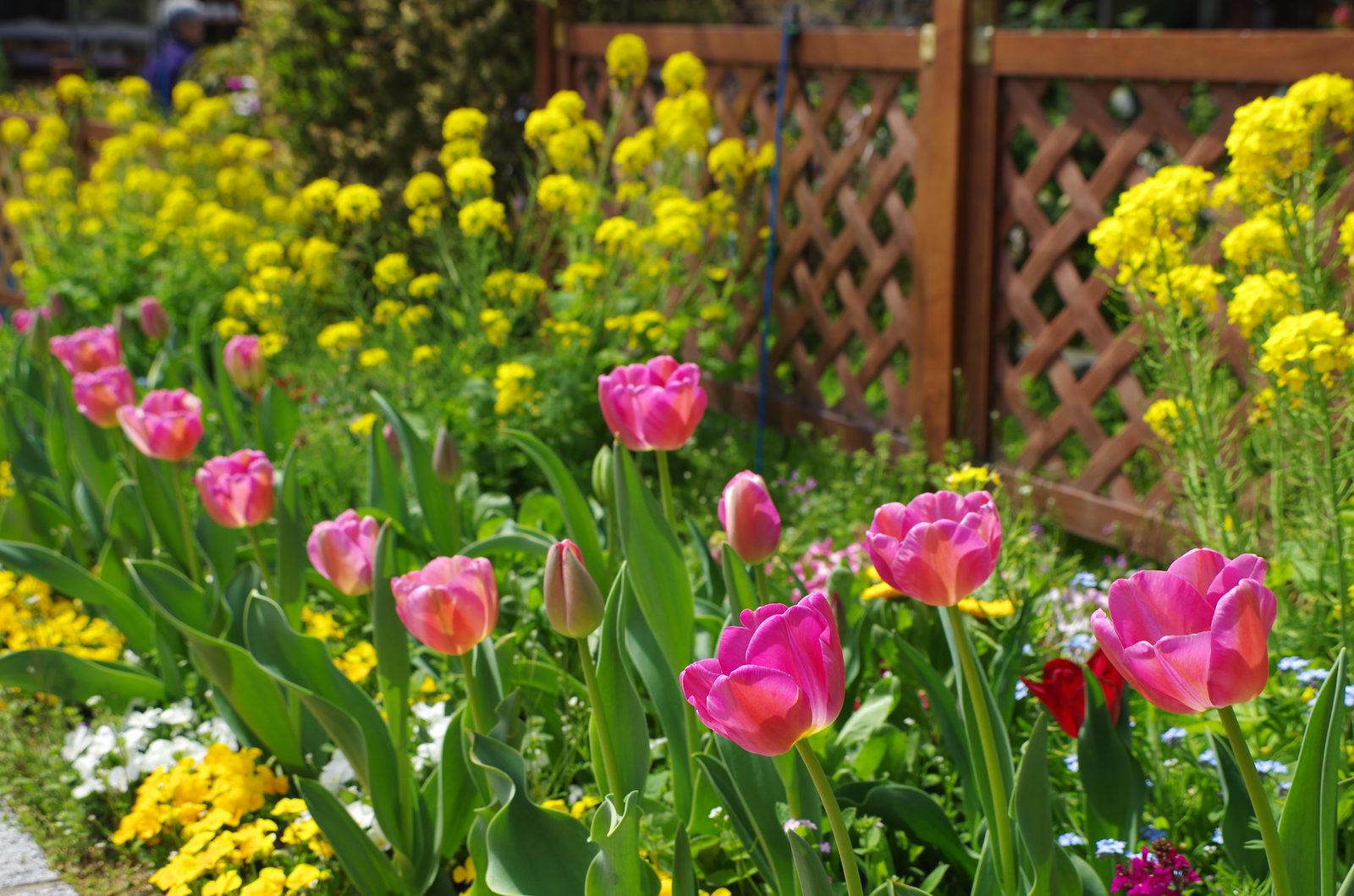
Photo: Japanese garden / Nankou Oronain (as36… (CC BY-SA 3.0) via Wikimedia Commons
GREEN×EXPO 2027 Pavilions — Are Reservations Required? (Latest Info)
“Do I need to reserve a slot to get into the popular pavilions at GREEN×EXPO 2027?” If you watched the scramble for pavilion reservations at the Osaka–Kansai Expo, this is probably top of mind.
So, the answer up front: there are expected to be almost no fully reservation-required facilities (per the Association’s briefing for the travel industry; TrabelVoice, October 8, 2026, confirmed October 7). Unlike the Osaka–Kansai Expo, there is no advance booking scramble — the system envisions one same-day reservation per person per day.
Some exhibits will use a same-day “viewing reservation” (kanran yoyaku) (official announcement, August 27, 2026), but which facilities it applies to has not been announced yet (as of October 2026).
This article separates what is officially confirmed from what we’re still waiting on. (This is an unofficial guide — always confirm the final details on the official site.)
Are there pavilion reservations? (Same-day “viewing reservations” for some exhibits)
Let’s start with the question everyone asks. The official announcement of August 27, 2026 confirmed that some exhibition facilities will use “viewing reservations.” Here is how they work (press release, Aug 27 / official FAQ):
- Bookable on the day of your visit only (you can book before entering the venue)
- One exhibit per ticket per day
- Slots open in three waves: 8:00 (10:00–12:00 slots), 11:30 (12:00–17:00 slots), 16:30 (17:00 to the last slot)
- Cancel up to 15 minutes before your slot (after that, the booking counts as used)
- For exhibits that also run a standby line, you may be able to get in by queuing without a reservation
- Target facilities have not been announced (each exhibitor is still deciding; they will be published on the official site)
It helps to keep the difference in character in mind. A horticultural expo is about flowers and greenery — it isn’t built around large thrill rides. The stars here are outdoor gardens and plantings, international exhibits, the Theme Pavilion and theater-style shows.
That means crowds may not pile up in one spot the way they did at Osaka. Even so, a venue with an immersive theater could meter entry in timed groups.
A practical way to plan around this:
- The 8:00 release on the day is your first chance. Once the target facilities are announced, decide which exhibit you want most.
- Use Osaka’s reservation flow only as a loose reference — not as confirmed Yokohama detail.
- What you can count on are the timed-entry plan below, plus advance booking for shuttle buses and parking.
Timed entry and how it relates to pavilion crowds
Even without per-pavilion booking, a system to manage the date and time of your visit is planned. Here’s how the pieces fit.
Tickets aren’t date-specific yet — timed-entry reservations have been open since September 18, 2026
Right now, official tickets are not tied to a specific date. The confirmed ticket facts:
| Item | Details |
|---|---|
| Advance sales | Began March 19, 2026 |
| Early-bird (through March 18, 2027) | ¥4,900 for adults |
| Standard in-period price | ¥5,500 |
| Season pass | ¥28,000 |
| Children aged 3 and under | Free |
On top of this, timed-entry reservations have been open since Friday, September 18, 2026 to spread out crowds (steps: how to make a timed-entry reservation).
In other words, buying a ticket may not be the same as securing your visit slot. (Check the official tickets page for the latest.)
When you go changes everything
The official daily attendance forecast shows that picking the right day directly shapes how comfortable your visit will be.
| Category | Expected visitors | Approx. days |
|---|---|---|
| Weekdays (before Golden Week / summer break) | ~50,000/day | 80 days |
| Weekdays (after Golden Week / summer break) | ~56,000/day | 47 days |
| Weekends & holidays (off-peak) | ~79,000/day | 46 days |
| Peak (Golden Week, September weekends, etc.) | ~105,000/day | 19 days |
Peak days draw more than double the crowds of a quiet weekday. If you want to take your time at the headline pavilions, build your plan around a weekday — ideally Tuesday to Thursday — and aim for right after opening or late afternoon.
The rainy season and the height of summer tend to be relatively quiet (a general rule of thumb). Combined with advance transport booking, “go on a quiet day” is your best move for the popular pavilions.
Don’t forget to book your trip to the venue
There is no station next to the venue. The standard route is a reservation-only shuttle bus from one of four stations: Seya, Mitsukyo, Tokaichiba, or Minami-machida Grandberry Park.
- Shuttle bus — service scales from about 90 buses a day on weekdays to roughly 160 on peak days; direct buses from Yokohama, Shin-Yokohama and Haneda are under consideration (not confirmed).
- Driving — on-site parking (about 5,690 car spaces on the north side plus around 540 on the west, among others, per the 3rd-edition transport plan) requires advance booking.
- Peak periods — park-and-ride at locations such as AEON Mall Yamato is arranged.
See our access guide for the full picture. Getting to the popular pavilions early starts with getting to the venue early — and that begins with a transport reservation.
The headline pavilions: the Japan Pavilion and Garden, and the Theme Pavilion
Here’s what we can say about the likely crowd-pullers, based on confirmed information.
Japan Pavilion and Garden
The Japan Pavilion and Garden is one of the largest at the expo, with an exhibition area of about 2.5 hectares. Its concept is “Reconsidering the Japanese View of Nature, Moving Toward the Future,” and it is described as an experiential facility featuring an immersive theater.
By sheer scale alone, it is shaping up to be a highlight of any visit. We’ll keep details current on the Japan Pavilion and Garden page.
Theme Pavilion
The Theme Pavilion “NEKKO” is the core facility carrying the expo’s overall message. Under the concept “All life is connected, with plants at the heart,” it conveys the power of plants and their ties with other life through exhibits and hands-on experiences, encouraging action based on Nature-based Solutions (NbS).
If you want to grasp the spirit of the expo first, this is a clear place to start. See the Theme Pavilion page.
The Horticultural Pavilion “IROHA-GARDEN” is another main facility. 71 countries and 5 international organizations have declared their participation (Association list dated August 4, 2026), but the contents of their exhibits (gardens) have not been released apart from the United Kingdom and Italy (see the list of participating countries (in Japanese)). We’ll add the international highlights as soon as they’re released.
Pavilions confirmed so far
The grounds are organized into five villages. Below are the pavilions that have been confirmed (names and exhibitors may still change).
Urban GX Village (cutting-edge technology)
- OBAYASHI MORI SORA MIRAI (Obayashi)
- Mitsubishi Minnano Miraikan
- KAJIMA TREE (Kajima)
- Daiwa House Group Endless Heart Park
- Yasashiku Naritai STUDIO (Toho-Leo)
- NTT EAST Pavilion “well” (NTT East)
- KT GROUP Mobi+ (Mobitas)
- Tokyu Group Pavilion
- CIRCULAR LINK YOKOHAMA Hub (Tsunagu Yokohama-kan, City of Yokohama)
Toho-Leo’s Yasashiku Naritai STUDIO stands out for reusing the facade of Panasonic’s “The Land of NOMO” pavilion from the Osaka–Kansai Expo — a fittingly sustainable touch for a horticultural expo.
Farm & Food Village (agriculture, food and wellbeing)
- JA Group “ITADAKIMASU: Bringing the Bounties of Nature to the Table”
- Meiji Group “ORAGA VILLAGE — Hometown of the Future”
- Yamazaki “A Bright Table for Tomorrow” Pavilion
- Sakata Seed “Seed Journey” (special exhibition hall)
- HONEY HARMONY GARDEN (Marucho)
Beyond these, Craft Village has Takenaka Group Kurukuruku and Sumitomo Forestry’s “Hyaku no Mori” (100 Forests), Kids Village has SOTETSU PARK and Shimizu Mori no Machi, and SATOYAMA Village has UR GREEN TABLE and Tsunagu Yokohama Field (City of Yokohama), among others. See the pavilion list for details on each.
What to watch for once announcements land
Finally, here are the items still awaiting an official word. We’ll update this article and the related pages as each one is released.
- Which facilities will use same-day viewing reservations
- Details of the international exhibits (what the 71 countries and 5 international organizations will show in their gardens)
- How metered-entry venues such as theaters will operate
For now, the takeaway is simple: rather than fretting over pavilion reservations, your surest preparation for a comfortable visit to the popular pavilions is to pick a quiet weekday and lock in your transport in advance.
We’ll update as news comes in — for the latest highlights, pair this with the bloom calendar and What is GREEN×EXPO 2027?.